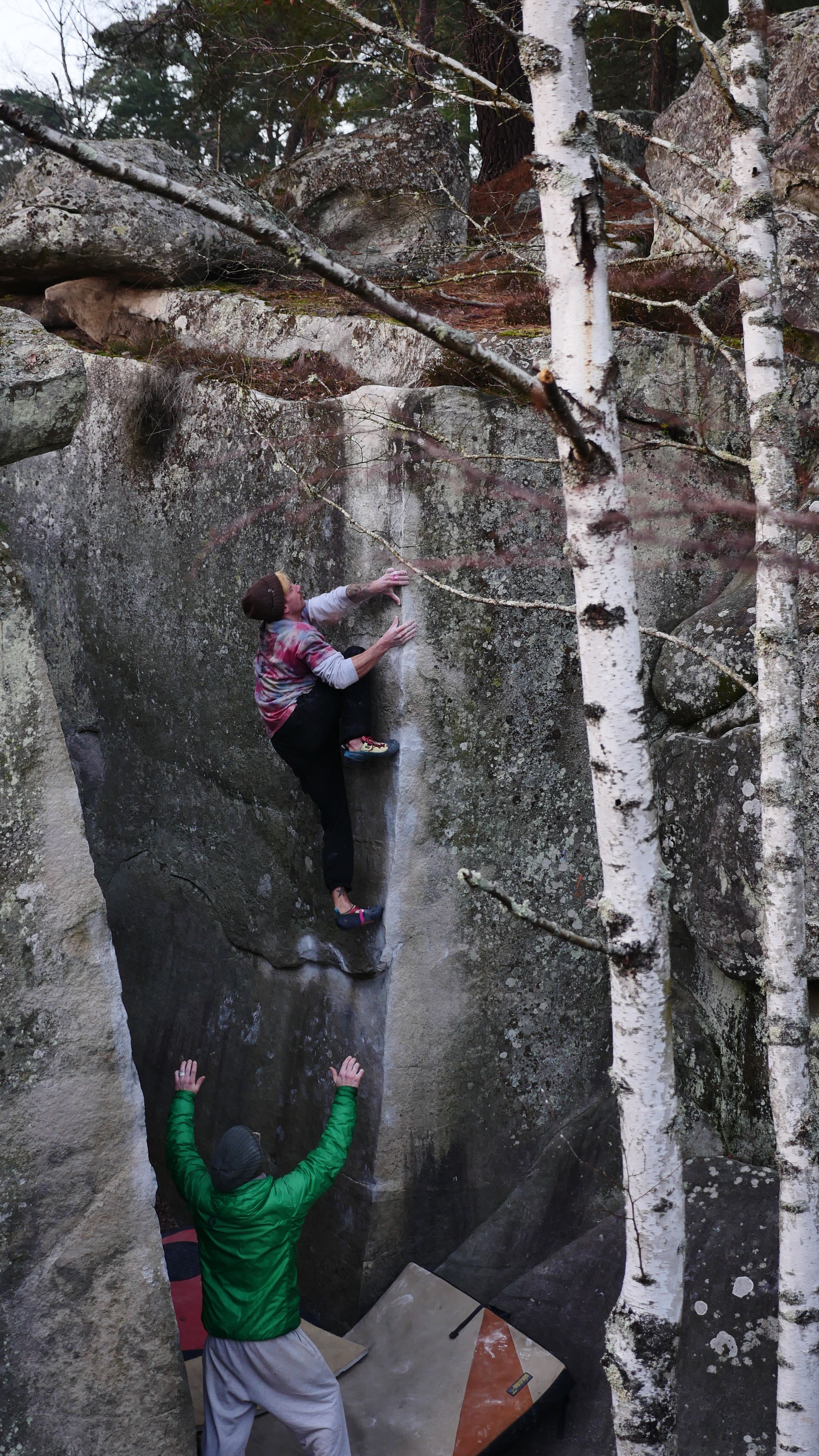
Choosing the perfect spot in Fontainebleau can be an art form in itself. With hundreds of sectors to choose from, the decision often determines whether you have a legendary session or a frustrating day. Here is a breakdown of how to navigate the complexity of "Bleau" conditions.
1. Define Your Goal: Projecting vs. Drifting
The first question you need to ask yourself is: What do I want from this day? Are you in the mood to "drift"—moving from block to block, exploring, and climbing plenty of moderate lines? Or do you have a specific plan and a hard project in mind?
If you want to drift, you need stable, dry conditions. If you are projecting at your limit, the nuances of the micro-climate become much more critical.
2. The Weather: Trust the Radar, Not the Forecast
In Fontainebleau, the weather is notoriously difficult to predict.
The 24-Hour Rule: I recommend looking a maximum of one day into the future. Long-term forecasts here are rarely accurate.
Rain Radar: This is your most important tool. Instead of checking general percentages, look at the actual rain radar to see where the clouds are moving.
The Golden Rule: Never climb on wet sandstone. The rock is porous and loses its structural integrity when damp. Climbing on wet holds can break them permanently.
3. Scenario A: The Dry & Warm Spell (Projecting at the Limit)
Let’s assume it’s around 20°C, it hasn't rained for a long time, and you want to climb hard. You might think the choice is easy, but heat is the enemy of friction.
Go North: My choice would be a north-facing slope (Nordhang).
Look for Overhangs: These areas are often avoided because they stay damp longer, but during a long dry spell, they finally become "climbable."
The Advantage: North-facing sectors stay out of the sun, keeping the rock cooler. Overhanging problems often rely on bigger holds or specific techniques that require slightly less "pure" friction than vertical technical slabs.
4. Scenario B: Unstable Weather & High Humidity
What if it’s cooler but the next rain shower is uncertain?
Wind is Key: It’s a common misconception that you need sun to dry the rock. In my experience, wind is far more important.
Exposed Sectors: Look for elevated, "airy" areas that catch the breeze. These can offer incredible friction once they dry out.
Have a Plan: These "windows" of good conditions are often short. This is not the time for drifting; you should have a clear idea of what you want to climb and move efficiently.
5. Rock Types and Texture
Not all sandstone in the forest is the same.
Compressed Rock: Places like Cuvier have very hard, compressed stone. These sectors require "peak conditions" (low humidity, cold temperatures) to feel good.
Rough Rock: Sectors like Bois Rond have a rougher texture that is much more forgiving when the conditions are less than perfect.
The Complexity of Choice
As you can see, finding the right area is a puzzle involving the season, the recent rain history, the wind, and even your own skin type. 2026 has been an exceptional year with rare dry phases, but usually, you have to be very strategic.
I will dive deeper into specifics—like how night temperatures affect "condi" and what "low-level clouds" mean for your session—in a future guide.
Thanks for reading, and see you in the forest!.
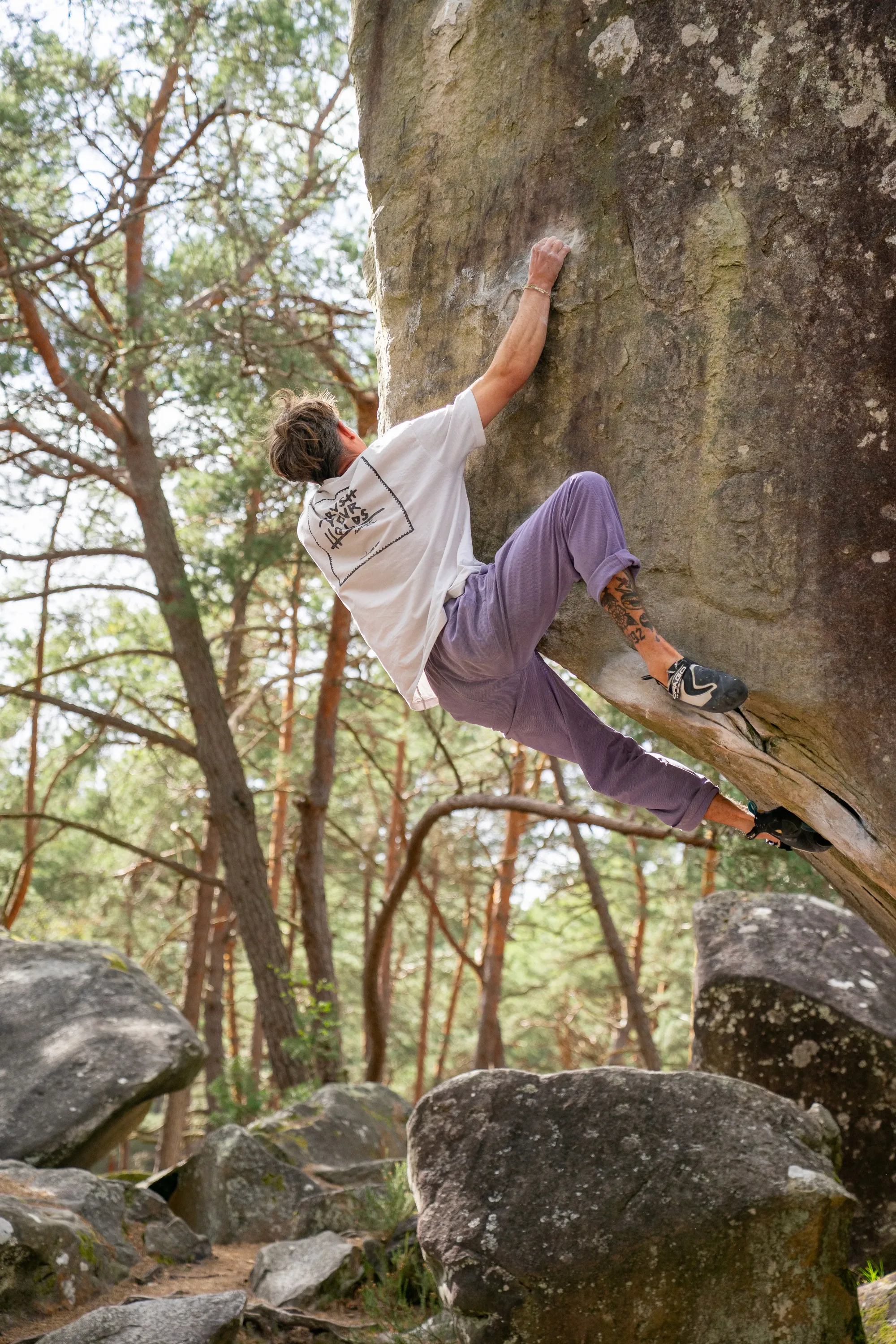
While the rain radar tells you if the rock is wet, understanding the physics of "condis" (conditions) tells you if the rock is climbable. In Fontainebleau, the most frustrating days aren't the ones with rain—they are the days when it looks dry, but the friction is non-existent.
Here is the logical breakdown of why that happens and how to predict it.
1. The Dew Point (Td): The Critical Threshold
Air is like a sponge; it can only hold a certain amount of water vapor. The warmer the air, the more moisture it can carry.
The Physics: The dew point is the temperature at which air becomes saturated. When the air temperature drops to the dew point, the relative humidity (RH) reaches 100%.
The Result: Moisture is no longer invisible vapor; it turns into liquid. This creates fog in the air and a microscopic film of water on the rock. Even if the stone looks dry, this film acts as a lubricant, destroying your friction.
2. Thermal Inertia: Why Rocks "Sweat"
Sandstone blocks are massive and have high thermal inertia—they change temperature much slower than the air. This leads to a phenomenon often called "sweating."
The Scenario: Imagine a cold night followed by a sudden warm, humid morning. The air warms up quickly, but the boulders stay cold.
The Logic: If the surface temperature of the rock is lower than the dew point of the incoming warm air, moisture will condense directly on the stone.
The Rule: Rapid temperature increases after a cold spell usually lead to terrible conditions, especially on massive blocks in sheltered areas.
3. Low-Level Clouds and the "Cloud Base"
Low-level clouds are essentially fog that hasn't touched the ground yet. They form when the air is cooled from below, often during "advection"—when warm, moist air moves over cold ground.
The Trap: If the cloud base is very low (e.g., 200m), it might be sitting right on top of the higher plateaus.
Sector Choice: In these cases, a sector like 95.2 or Roche aux Sabots (which are higher up) might be shrouded in mist, while a lower-lying sector stays slightly clearer. However, if the air is stagnant, the moisture will eventually settle everywhere.
4. The Antidote: Wind and Air Exchange
If the physics are working against you (high humidity and shifting temperatures), there is only one factor that can save your session: Wind.
Why it works: Wind physically moves the saturated
air away from the rock surface. It prevents the "micro-climate" around the boulder from reaching 100% humidity.
Strategic Choice: On days with high humidity or "sweating" rocks, you must prioritize exposed, airy sectors. Avoid deep "basins" or dense forest areas where the air stands still.
5. Logic-Based Area Selection
To summarize the physics into a decision-making process:
Rising Temperatures + High Humidity: Avoid deep forest and massive, cold blocks. Look for rougher stone that is less affected by micro-condensation.
Low-Level Clouds/Fog: Stay below the cloud base if possible, or find a sector with enough wind to "pierce" the fog.
Stable Cold: This is the gold standard. When the rock and air are both cold and the dew point is low, the "friction" is purely mechanical—your skin and the rubber can finally do their job.
Understanding these variables won't make the weather better, but it will stop you from wasting a day at the wrong sector. As I’ve noticed in this exceptional year of 2026, being in the right place at the right time is 50% of the send.
See you at the blocks.